
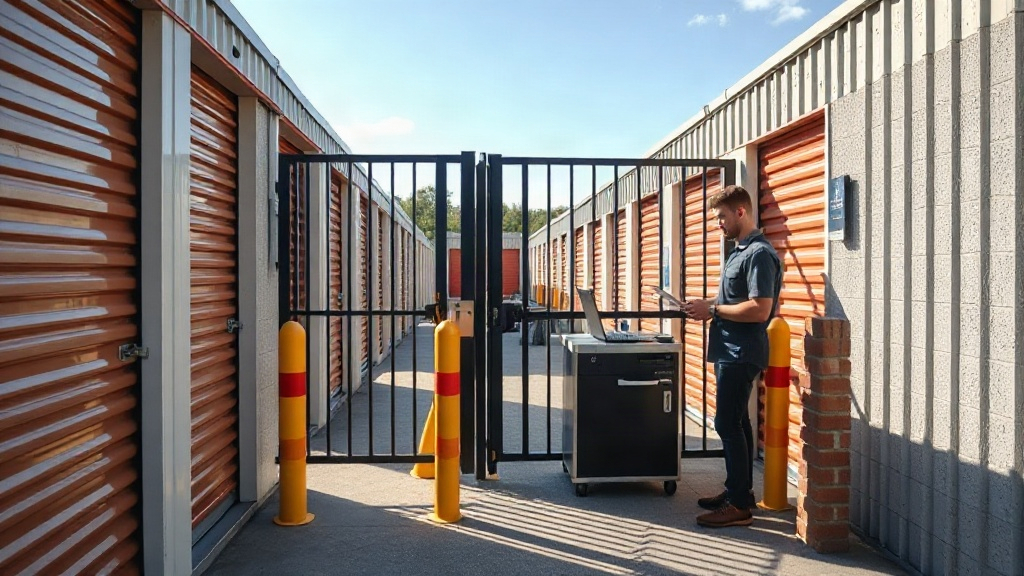
If you're running a small self-storage facility without full-time staff, you've probably asked yourself: How do I give tenants 24/7 access without being there to let them in? You need a reliable self storage gate access system that works on its own, integrates with your management software, and doesn't cost more than your monthly revenue from a half-dozen units.
This guide walks you through the gate access options that make sense for small operators—what actually works when you're the one answering calls, collecting rent, and maintaining the property.
Why Gate Access Matters for Small Facilities
Gate access isn't just about security. It's about delivering the convenience tenants expect—access on their schedule—while protecting your property and your revenue. A good storage facility gate system should:
- Let tenants in 24/7 without requiring you on-site
- Automatically deny access when a tenant is past due
- Log every entry for security and accountability
- Integrate with your management software so you're not maintaining two systems
- Work reliably without constant maintenance calls
The challenge for small operators is finding a solution that does all this without the enterprise price tag or complexity built for 500-unit facilities.
Gate Access System Options for Small Operators
Here's what's actually available, and what works when you don't have on-site staff or an IT department.
Keypad Entry Systems
Keypads let tenants enter a unique code to open the gate. They're the most common self storage access control software option for small facilities because they're affordable, straightforward, and don't require tenants to carry cards or fobs.
What to look for:
- Integration with your management software so codes are created automatically at move-in and deactivated when a tenant goes delinquent
- Ability to generate unique codes for each tenant (not one shared code)
- Remote management—you should be able to add or disable codes without driving to the facility
- Activity logs that track who entered and when
Keypads work well for facilities with 50–200 units where you want simple, reliable access control without ongoing costs for cards or fobs.
Card/Fob Systems
These use RFID cards or key fobs that tenants scan at the gate. They're slightly more secure than keypads since tenants can't share codes as easily.
Trade-offs:
- You'll need to stock and distribute cards or fobs at move-in
- Tenants lose them, requiring replacements and your time
- Slightly higher upfront cost for readers and cards
- Still need software integration to activate and deactivate access automatically
Cards work well if you have higher turnover or want an extra layer of security, but they add operational overhead that keypads don't require.
License Plate Recognition (LPR)
LPR systems use cameras to read license plates and automatically open the gate for authorized vehicles. They're convenient for tenants—no stopping to enter a code—but come with a much higher price tag.
For most small operators, LPR is overkill. The cost and complexity usually only make sense for larger facilities or those in high-traffic areas where gate speed is critical.
Comparison at a Glance
| Option | Best For | Integration Needed? | Tenant Effort |
|---|---|---|---|
| Keypad | Small facilities (50–200 units) | Yes | Enter code |
| Card/Fob | Higher turnover, extra security | Yes | Scan card |
| LPR | Large or high-traffic facilities | Yes | Drive through |
Why Software Integration Is Non-Negotiable
A self storage gate access system is only as good as its integration with your management software. Here's why:
Without integration, you're manually adding codes when tenants move in, manually disabling access when they go past due, and manually checking logs when something goes wrong. That's not automation—it's just extra work.
With integration, your software handles it all automatically:
- New tenant signs a lease online? Their gate code is generated and sent instantly.
- Tenant misses a payment and hits your delinquency threshold? Access is revoked automatically.
- Tenant pays their past-due balance? Access is restored without you lifting a finger.
This is especially critical for small operators who are also handling collections, maintenance, and everything else. You don't have time to babysit gate codes.
How Stowlane Handles Gate Access
Stowlane integrates directly with gate systems so access control happens automatically as part of your workflow—not as a separate system you have to manage.
When a tenant completes an online move-in and e-signs their lease through Stowlane, their gate code is created and delivered automatically. If they enroll in autopay (using your own Stripe account so you keep full control of funds), you'll rarely need to think about access at all. And when a tenant does go delinquent, Stowlane's automatic late fees and delinquency ladder can be configured to revoke gate access at whatever threshold you set—whether that's one day late or fifteen.
Activity logs and reports give you visibility into who's accessing the facility and when, all from the same dashboard where you manage leases, payments, and tenant communication. And because Stowlane's pricing is flat—starting at $99/month for the first 100 units with no per-unit fees or contracts—you're not paying more as you grow or getting squeezed by forced insurance commissions.
If you're managing multiple locations, gate integration works across unlimited properties under one account, so you're not juggling multiple logins or systems.
What to Avoid as a Small Operator
Don't overpay for enterprise features you don't need. Many gate system vendors will try to sell you on facial recognition, mobile app access, or advanced analytics that sound impressive but add zero value for a 75-unit facility.
Also avoid systems that require proprietary hardware you can't replace or upgrade. You want a gate controller that works with standard access control protocols, so you're not locked into one vendor forever.
And never choose a gate system that doesn't integrate with your management software. If the vendor says "it's easy, you just log into our portal to manage codes," walk away. That's not a solution—it's a second job.
Getting Started
Choosing the right self storage gate access system comes down to three things: integration with your management software, reliability without on-site staff, and cost that fits your actual revenue. For most small operators, a simple keypad system with solid software integration checks all the boxes.
If you're evaluating management software or looking to switch, see how Stowlane's flat pricing and built-in gate integration compare at stowlane.com/pricing.