
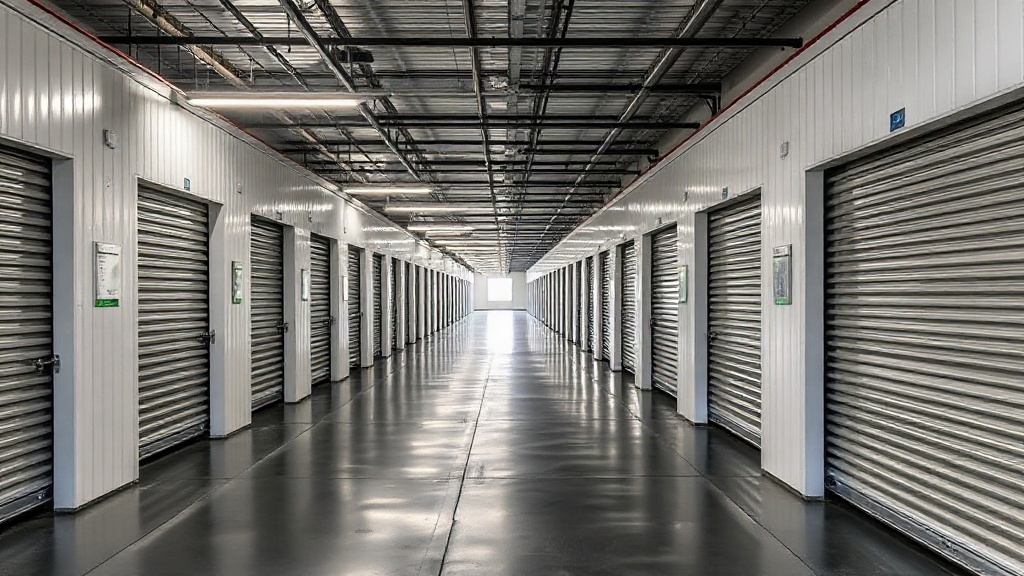
PGIM Real Estate has provided a $57 million loan to convert a Manhattan office building at 152 West 36th Street into a roughly 1,500-unit self-storage facility, marking one of the largest office-to-self-storage conversion financings in a dense urban core to date. The project underscores a broader trend: institutional lenders are increasingly willing to back adaptive reuse projects that transform underutilized office and commercial real estate into climate-controlled storage in high-demand metro markets.
The Manhattan urban infill financing comes as office vacancy rates remain elevated in many cities and demand for conveniently located self-storage continues to grow. Rather than pursuing costly ground-up construction, developers and operators are identifying older buildings with favorable zoning, ceiling heights, and loading access—then repositioning them as modern storage facilities.
What Office-to-Self-Storage Conversions Mean for Small Operators
For small, independent self-storage operators, the PGIM deal signals that specialty lenders and regional banks may be more receptive to adaptive reuse pitches than in years past. While a $57 million loan is beyond the scale of most independent projects, the underlying economics—lower land costs, faster entitlements, and strong urban demand—apply at smaller sizes as well.
A regional operator evaluating a vacant retail building or obsolete warehouse can now point to institutional capital flowing into similar conversions as evidence of market validation. The key is understanding local zoning requirements, demonstrating demand through feasibility studies, and presenting lenders with a clear operational plan that includes modern management infrastructure from day one.
Running a Conversion Project with the Right Tools
Adaptive reuse opportunities for small operators hinge not only on real estate fundamentals but also on the ability to operate efficiently once the facility opens. A 150-unit conversion in a urban neighborhood, for example, needs the same core software capabilities as a ground-up suburban facility: online leasing, automated billing, and streamlined tenant communication.
That's where Stowlane comes in. Built specifically for small and independent operators, Stowlane handles tenant and lease management, online payments with autopay running on the operator's own Stripe account, automatic late fees, and a configurable delinquency ladder that keeps rent collection on track without constant manual follow-up. Lease e-signing means new tenants can move in quickly, critical when competing against larger facilities with polished onboarding.
For operators managing a newly converted building—often with quirky floor plates, mixed unit sizes, and phased openings—Stowlane's reporting tools provide real-time visibility into occupancy, revenue, and delinquency across every unit type. The optional tenant portal lets renters pay bills, update contact information, and request gate codes without phone calls or office visits, reducing staffing overhead during the ramp-up period when every dollar counts.
Because Stowlane offers free unlimited locations and flat pricing by facility size starting at $99 per month for the first 100 units, an operator who converts a small office building and later adds a second site pays only for the units they manage, not per-location fees that can spiral as a portfolio grows.
Positioning for the Next Wave of Conversions
Office-to-self-storage conversions are unlikely to slow as long as urban office markets remain soft and storage demand stays resilient. Small operators who can move quickly, navigate municipal approvals, and launch with professional management software will have an edge over competitors still relying on spreadsheets and manual processes.
The PGIM financing demonstrates that capital is available for well-conceived projects. What separates successful conversions from stalled ones is often execution: securing entitlements, managing construction, and opening with systems that inspire tenant confidence and keep operations lean.
For independent operators ready to explore adaptive reuse, the infrastructure question is now straightforward. Modern self-storage management software designed for small portfolios—with tenant portals, automated rent collection, e-signing, and transparent pricing—makes it possible to compete on service and efficiency from day one, whether the building is brand new or a century-old office tower reimagined as storage.
If you're evaluating a conversion opportunity or simply want to bring your current facility up to speed with tools built for independent operators, explore what Stowlane can do. There's no long-term contract, no setup fees, and you can be up and running in an afternoon.