
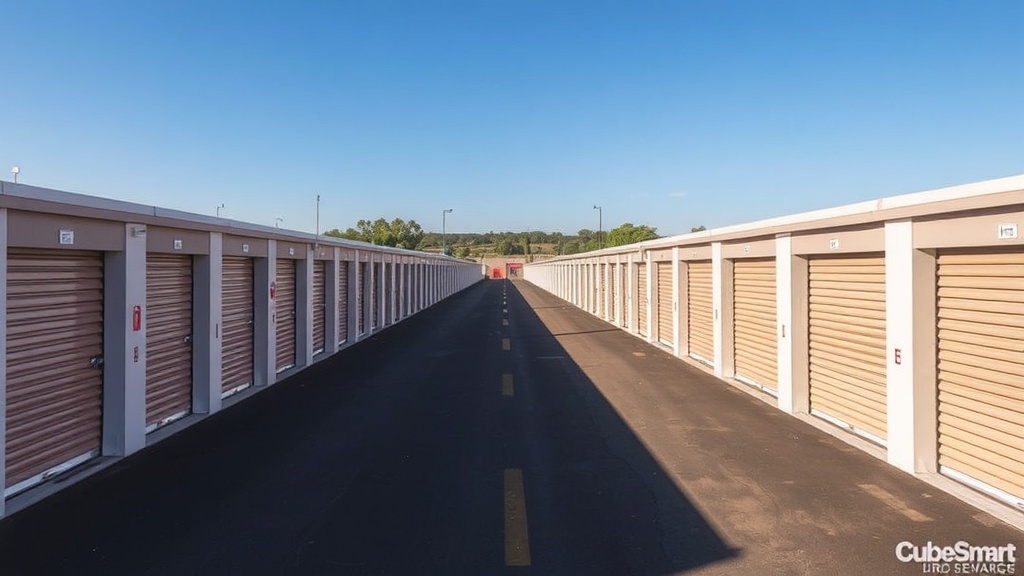
CubeSmart has opened a new 90,000-square-foot self-storage facility in New Braunfels, Texas, adding 750 climate-controlled and drive-up units to the fast-growing city between Austin and San Antonio. The facility, located near the I-35 corridor, represents a significant institutional bet on secondary Sun Belt markets at a time when national self-storage fundamentals have softened in many metro areas.
New Braunfels has seen explosive growth over the past decade, with population increasing more than 50% since 2010, driven by spillover demand from Austin's booming tech economy and San Antonio's military and healthcare sectors. The city's median home price has climbed steadily, and new residential construction continues at a rapid pace—exactly the demographic and housing indicators that attract REIT capital.
The CubeSmart New Braunfels opening is notable not because it's an isolated move, but because it reflects a broader institutional strategy: while REITs have pulled back from saturated primary markets, they continue deploying significant capital into high-growth secondary Sun Belt cities where population and household formation trends remain strong.
What the CubeSmart Move Means for Small Operators
For independent self-storage owners, this opening serves as an important market barometer. When a publicly traded REIT commits millions of dollars to a secondary market, it's a signal that institutional analysts believe the fundamentals—population growth, household formation, housing affordability stress, and demand density—justify the investment even amid broader industry headwinds.
Small operators should ask themselves three questions: First, does my local market show similar growth metrics to places like New Braunfels? Second, am I positioned to compete if REIT competition arrives targeting the same demographics? And third, should I be upgrading my operations now to defend market share or capture growth before larger players enter?
The gap between institutional operators and small independents often comes down to execution: online payment convenience, automated collections, professional lease processes, and the ability to scale efficiently. A small operator running a 150-unit facility, for example, can't afford to lose tenants over clunky payment systems or slow lease processes when a new CubeSmart with polished operations opens down the road.
Competing on Operations, Not Just Location
Sun Belt secondary market demand remains real, but so does REIT competition for small operators who find themselves in the path of institutional expansion. The good news: independent operators can close the operational gap without enterprise-level budgets.
Stowlane gives small and independent operators the same management capabilities that larger players use—tenant and lease management, online payments through the operator's own Stripe account with autopay options, automatic late fees and delinquency tracking, lease e-signing, detailed reporting, an optional tenant portal, and gate code management—all on flat pricing that starts at $99 per month for facilities up to 100 units, with free unlimited locations.
When a hypothetical 200-unit independent facility faces new competition from a REIT opening nearby, the ability to offer seamless online rent payments, enforce collections automatically with a delinquency ladder, and sign leases electronically without scheduling office visits becomes a competitive advantage, not a luxury. Tenants expect digital convenience in 2025, and operators who can't deliver it risk losing occupancy to those who can.
Benchmark Your Market, Then Act
The CubeSmart New Braunfels opening isn't a reason to panic—it's a reminder to evaluate your own market's trajectory. Are you in a high-growth Sun Belt secondary city? Is population increasing? Is new housing construction strong? If the answers are yes, institutional capital may already be eyeing your area, and preparing your operations now is smarter than reacting later.
Independent operators have advantages REITs don't: local knowledge, customer relationships, and operational flexibility. But those advantages only hold if the baseline experience—paying rent, signing leases, resolving delinquencies—is fast, professional, and digital.
Whether you're defending against new competition or positioning to capture growth in your own high-demand market, operational readiness matters. See how Stowlane helps small operators compete with professional-grade management software at independent-friendly pricing—no long contracts, no per-tenant fees, just flat monthly rates. Try it free for 30 days.