
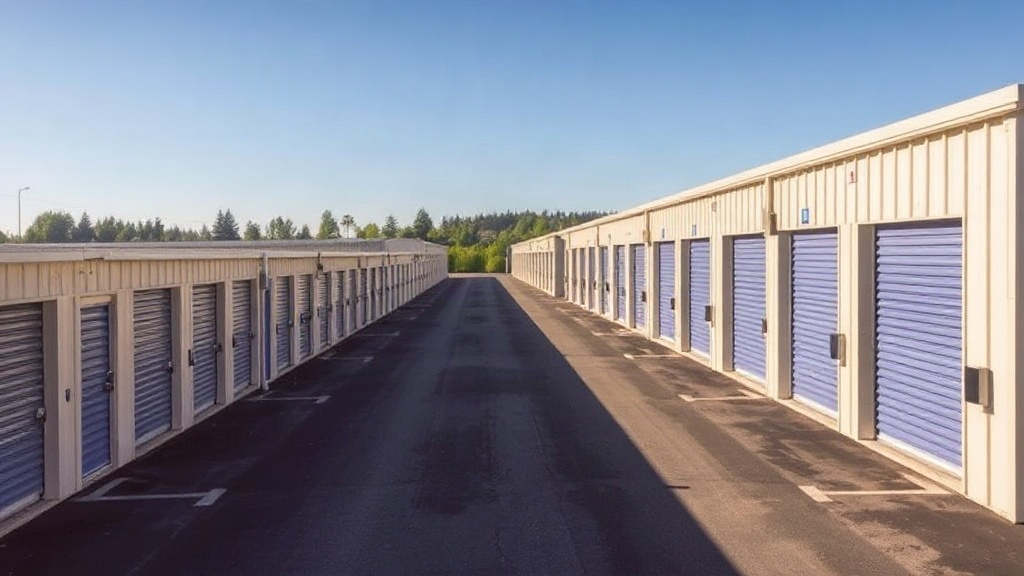
Prime Group Holdings has kicked off a national self-storage solar deployment in partnership with Wunder, a commercial solar developer, starting with first-phase rooftop installs across the REIT's portfolio. The initiative aims to convert underutilized rooftop space into revenue-generating clean-energy assets while cutting operational costs and burnishing the brand's sustainability credentials.
The Prime Group Holdings Wunder partnership marks one of the largest coordinated solar rollouts in the self-storage sector to date, and signals that solar is no longer a niche sustainability play reserved for institutional players. For small, independent operators, the news is a case study worth watching closely: how Prime Group structures power purchase agreements, monetizes excess electricity through net metering or wholesale sales, and markets the solar installations to tenants could offer a clear playbook for single-site and regional owners looking to capture the same economics at a smaller scale.
What Independent Operators Should Copy
The rooftop solar revenue strategy behind this deployment rests on three pillars. First, most commercial solar projects are financed through third-party leases or power purchase agreements that require little to no upfront capital from the facility owner. Second, on-site generation can slash utility bills by 30 to 70 percent, depending on local rates and sun exposure. Third, in many states, operators can sell surplus power back to the grid or to nearby businesses, turning the roof into a genuine profit center rather than just a cost saver.
For a hypothetical 150-unit independent facility, a modest rooftop array might generate enough electricity to cover common-area lighting, gate systems, climate control for office space, and a portion of HVAC load—immediately improving net operating income. In sunnier markets with strong net-metering policies, the same array could produce a monthly credit that offsets power bills entirely during peak months.
The marketing angle matters, too. Prime Group is likely to tout its solar installs in tenant-facing communications, on facility websites, and in local outreach—positioning the brand as environmentally responsible and forward-thinking. Independent operators can adopt the same messaging at almost no cost, updating lease documents, posting photos of the array in their tenant portal, and highlighting the solar installation in Google Business Profile posts and social media.
Managing the Operational Lift with Stowlane
Adding solar to a facility doesn't create new tenants, but it does create new talking points, potential rate justification, and a need to track the incremental savings in your financials. That's where clean operational infrastructure pays off. Stowlane gives small operators the same professional back-office tools that national players rely on—without the enterprise price tag or multi-year contract.
When you roll out a capital improvement like solar, you want every other part of the operation running smoothly so you can focus on the project itself. Stowlane handles tenant and lease management, online payments and autopay on your own Stripe account, automatic late fees and a configurable delinquency ladder, and lease e-signing—all from a single dashboard. Reports let you compare utility expenses month-over-month and year-over-year, so you can measure exactly how much the solar array is saving and communicate that ROI to lenders, partners, or prospective buyers.
The optional tenant portal keeps renters informed and engaged, a natural place to share updates about facility improvements like solar. Gate code management ensures access control stays seamless even as you're coordinating with installers and inspectors. And because Stowlane offers free unlimited locations with flat pricing by facility size—starting at $99 per month for the first 100 units—you can manage a single site or a small portfolio without worrying about per-location fees eating into the savings your solar panels are generating.
Why Now Is the Time to Watch and Learn
Federal tax credits, state incentives, and falling equipment costs have made commercial solar more accessible than ever. The Prime Group and Wunder deployment will likely be documented in trade press, earnings calls, and case studies over the next 12 to 18 months, offering independent operators a rare window into deal structures, timelines, and financial performance that are usually kept private.
Small operators who pay attention now—and who keep their own operations efficient and data-driven—will be best positioned to pursue similar projects when the numbers make sense for their markets. Professional management software isn't a prerequisite for going solar, but it's the foundation that lets you move quickly and confidently when the opportunity arrives.
Ready to tighten up your operations? Start a free trial of Stowlane today and see how simple self-storage management can be.